

 sales@magnumohs.com
 00 91 80808 50482
_Logo.jpg)

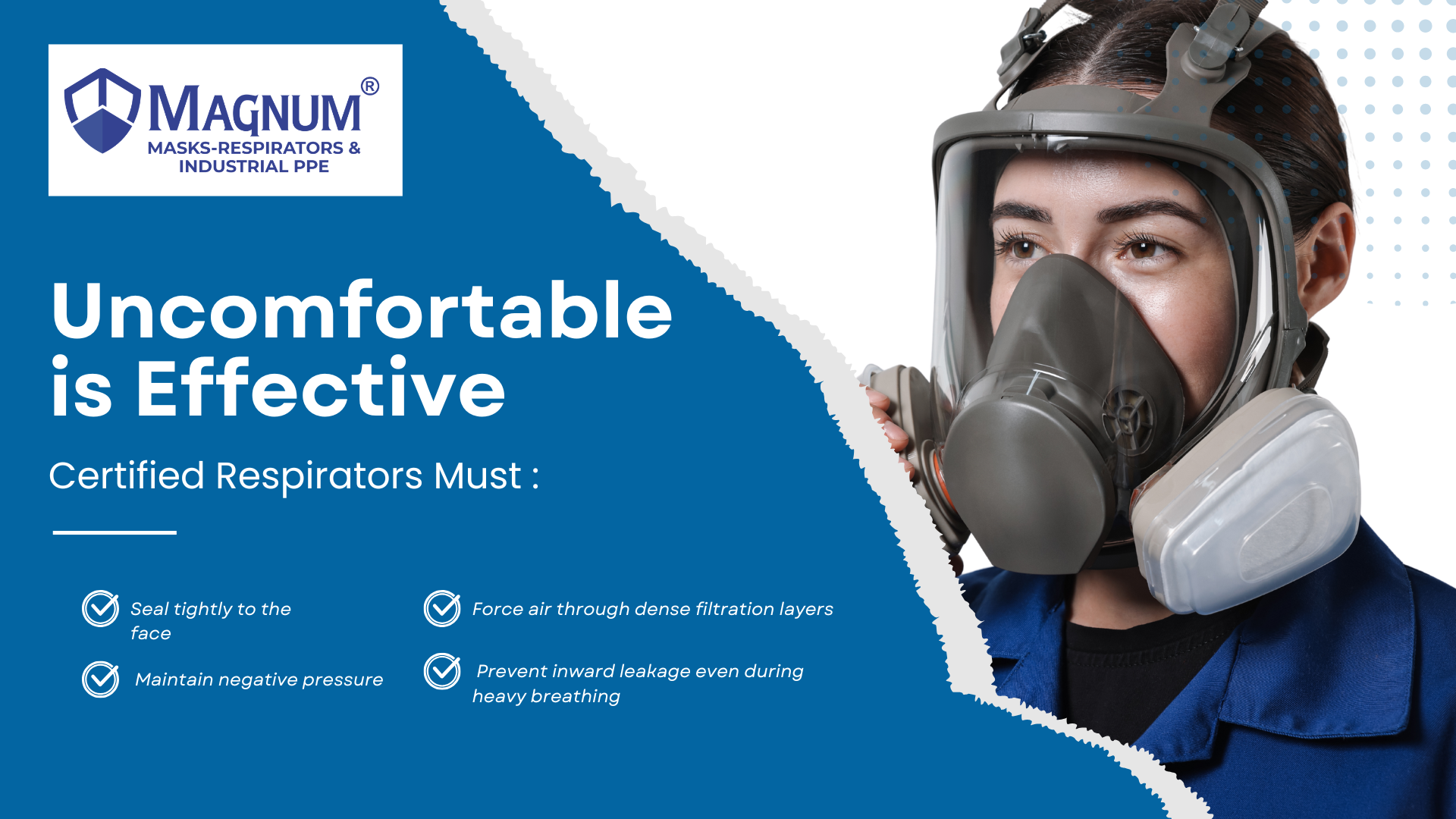
Respirators are now a daily necessity across construction sites, pharmaceutical plants, fabrication workshops, hospitals, and heavy manufacturing industries. Yet many workers across industrial regions still feel that wearing them for long hours can be tiring, warm, or restrictive. When this happens, respirators are loosened, pulled down, or worn inconsistently — and that is when a critical safety product silently stops protecting.
Importantly, discomfort is not always caused by poor design. In most real-world cases, the issue stems from incorrect model selection, improper fit, or lack of user training. When a respirator is sourced from a certified manufacturer producing BIS-approved IS 9473 filtering half masks or NIOSH-approved respirators, it is engineered not only for filtration performance but also for sustained usability during extended work shifts — provided it is selected and worn correctly.
Standards like IS 9473 (India) and NIOSH 42 CFR 84 (USA) define respirator performance through rigorous laboratory testing that evaluates:
While these parameters are technical on paper, their meaning on the shop floor is simple:
A properly certified respirator must consistently
✔ Filter airborne hazards
✔ Stay securely positioned during physical work
✔ Allow comfortable breathing for long durations
When the correct model is chosen from an experienced, certified respirator manufacturer, these issues are significantly reduced.
Across multiple industrial audits, one consistent observation emerges:
Workers comply with PPE protocols only when equipment allows natural movement, breathing, and communication.
Industrial procurement practices in India have evolved significantly. Organisations are moving beyond price-driven purchasing and prioritising certified respiratory PPE that meets recognized standards such as:
IS 9473 BIS certification for filtering half masks in India
NIOSH approval for international compliance
EN standards where global supply chains require them
Working with a trusted certified PPE manufacturer helps companies:
Pass internal and external safety audits
Meet multinational client compliance requirements
Build workforce confidence
Strengthen occupational health programs
For exporters, globally recognised certifications like NIOSH also support acceptance in regulated markets including North America, the Middle East, and Africa.
Small Practical Steps That Dramatically Improve Performance
Even the most advanced respirator cannot perform properly if worn incorrectly. A few simple practices can significantly enhance both comfort and protection:
Perform a face-fit check before entering hazard zones
Adjust straps evenly for balanced pressure distribution
Replace disposable respirators as recommended in dusty environments
Store respirators in clean, dry conditions between uses
Select respirators according to hazard type — not general purpose use
These simple steps require minimal effort but greatly improve real-world protection.
From Basic Compliance to Performance-Driven Safety
Industrial safety in India is steadily moving from checkbox compliance toward performance-based selection. Today, forward-thinking organisations evaluate respirators not only for certification marks but also for consistency, quality control, and worker acceptance.
Partnering with an established manufacturer producing BIS-certified IS 9473 respirators and NIOSH-approved models ensures dependable performance across batches — a factor that becomes especially important in large-scale industrial deployments and export-oriented operations.
Respirators are no longer occasional safety accessories — they are essential daily protection equipment. Because they are worn for extended periods, they must deliver both reliable filtration performance and practical comfort.
When the correct certified model is selected, properly fitted, and sourced from a trusted manufacturer, respirators integrate seamlessly into routine work. Workers no longer feel the need to adjust or remove them frequently — and protection continues quietly in the background, safeguarding health shift after shift.