

 sales@magnumohs.com
 00 91 80808 50482
_Logo.jpg)


In a busy Indian operating theatre or on a manufacturing shop floor running at 40°C with high humidity, a mask is supposed to protect the wearer. But in reality, many masks become something else entirely:
A breathing barrier that staff secretly hate.
Procurement managers and safety officers see the symptoms every day:
The instinctive reaction is often to blame user compliance.
But after decades in PPE manufacturing, we can say with confidence:
The problem usually isn’t the wearer — it’s the mask technology.
And more specifically, it’s the meltblown layer inside the mask.
Every surgical mask or filtering respirator has an invisible engine — the meltblown filtration layer.
This layer determines two critical factors:
In many low-cost masks, manufacturers achieve filtration simply by making the meltblown thicker and denser. On paper this works. In practice, especially in Indian summer conditions, it creates serious problems.
Dense mechanical filtration often results in:
For a nurse in an ICU or a worker wearing PPE for 6–8 hours, this becomes a real operational issue.
The new generation of masks uses electrostatically charged meltblown media.
Instead of relying purely on dense fabric to block particles, electrostatic filtration works like a microscopic magnet, attracting airborne particles without restricting airflow.
This technology allows masks to achieve:
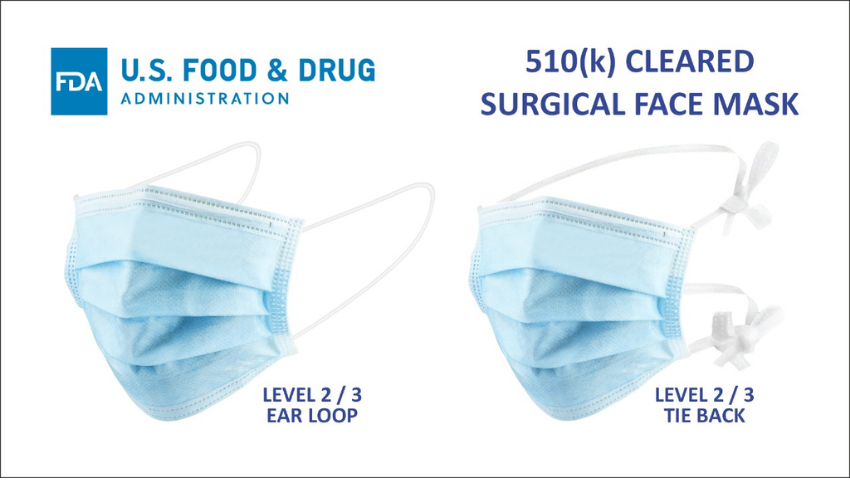
At Magnum Health & Safety, our surgical masks and filtering respirators use high-performance meltblown filtration media designed for long-duration wear in demanding climates.
In India, certification is no longer optional. Large hospital networks, government buyers and GeM procurement increasingly require verified testing and certification.
Key benchmarks include:
BIS IS 16289 (Surgical Masks) BIS certification ensures masks meet requirements for:
SITRA Testing The South India Textile Research Association (SITRA) is one of India’s most respected mask testing laboratories. SITRA reports verify actual performance parameters such as:
NIOSH Certification for Respirators For higher risk environments, NIOSH approved N95 respirators provide certified protection against airborne particles. Magnum manufactures NIOSH approved N95 respirators designed for:
Global PPE designs often assume temperate climates. But India presents unique challenges:
In such conditions, masks that rely on dense mechanical filtration quickly become uncomfortable. Magnum’s filtration media is engineered with moisture-resistant properties that help maintain filtration integrity even during long shifts in humid environments.
This helps ensure:
Because in real-world PPE use, comfort drives compliance.
When procurement teams evaluate large tenders — sometimes 10 lakh masks or more — the difference of 20–30 paise per mask can look significant. But the true cost of low-breathability masks appears elsewhere.
Magnum Health & Safety designs PPE not as isolated products but as integrated protection systems for healthcare and industrial environments.
Our range includes:
With over three decades of manufacturing expertise, Magnum supplies PPE solutions to hospitals, pharmaceutical facilities, and industrial sectors in India and global markets.
Before finalizing your next procurement order, ask your supplier:
1️⃣ Is the meltblown filtration media electrostatically charged?
2️⃣ Can you provide BIS or SITRA reports showing breathability (Delta P)?
3️⃣ Are the mask components — such as nose clips and elastic bands — designed for long shifts and humid environments?
If the answers are unclear, it may be time to review your supplier.
India’s healthcare and industrial sectors are evolving rapidly. Today’s PPE procurement must balance:
At Magnum Health & Safety Pvt. Ltd., we believe the most important part of a mask is the part you cannot see — the science behind the filtration.
Because effective PPE should support your team through the entire shift — not become the reason they take it off.