

 sales@magnumohs.com
 00 91 80808 50482
_Logo.jpg)

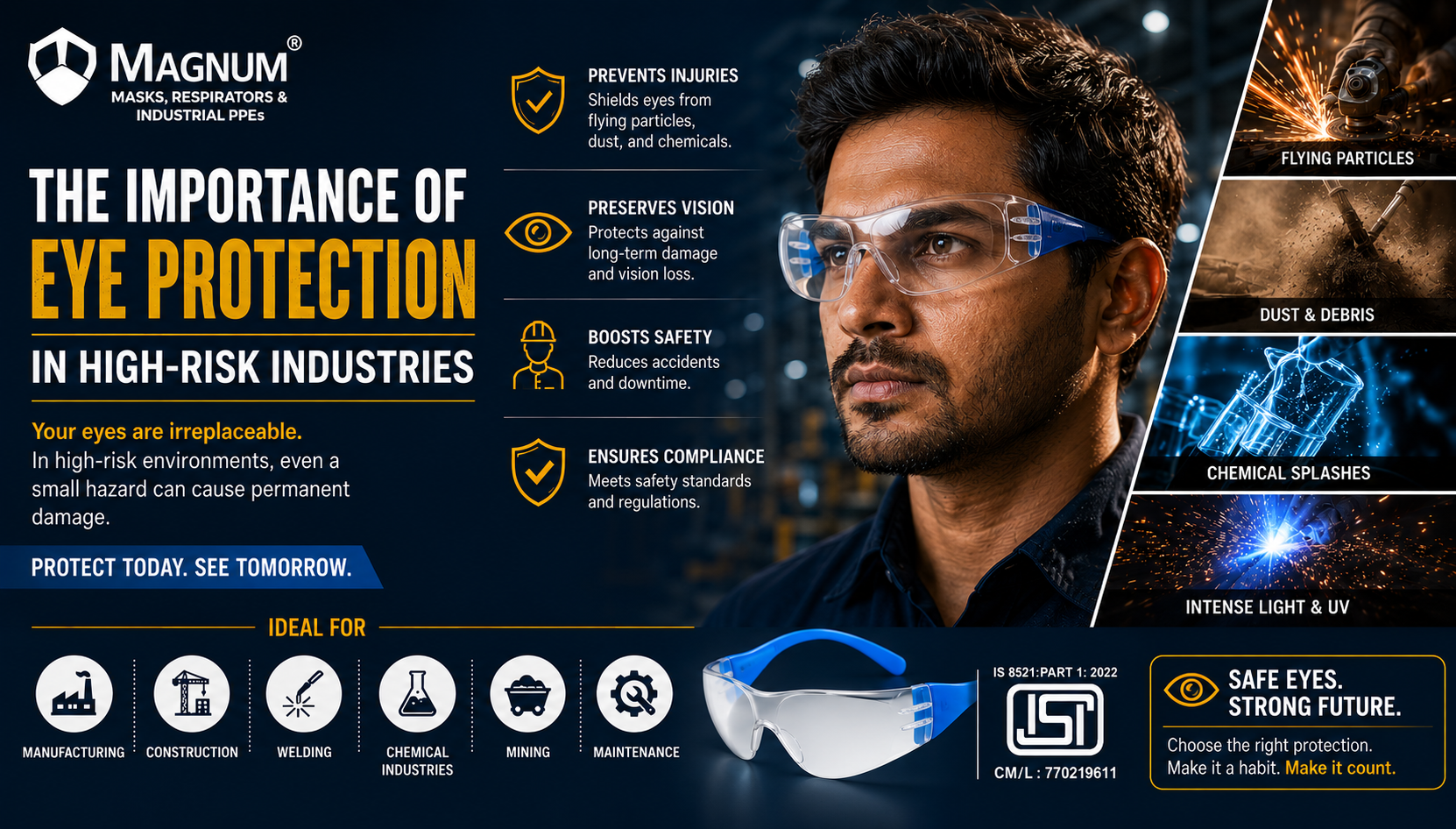
Workplace safety is a critical aspect of every industrial operation, especially in high-risk environments where employees are exposed to various hazards daily. While organizations often prioritize head, hand, and respiratory protection, eye safety is sometimes overlooked despite being equally important. The eyes are among the most vulnerable parts of the human body, and even a minor injury can lead to temporary or permanent vision loss.
In industries such as construction, manufacturing, mining, chemical processing, pharmaceuticals, welding, and oil & gas, workers face constant exposure to flying debris, dust, chemicals, sparks, and harmful radiation. Without proper eye protection, these hazards can cause severe injuries that affect both employee well-being and workplace productivity.
As a leading provider of industrial safety solutions, Magnum Health & Safety Pvt. Ltd. understands the importance of protecting workers from occupational hazards. Through high-quality safety eyewear solutions, businesses can create safer workplaces while ensuring compliance with industry safety standards.
Eye injuries can occur in a matter of seconds, often when workers least expect them. Industrial environments contain numerous risks that can damage vision and lead to costly medical treatments or lost workdays.
Flying particles generated from grinding, drilling, cutting, or machining operations are among the most common causes of eye injuries. These tiny particles can penetrate the eye and cause significant damage if workers are not wearing proper protective eyewear.
Chemical splashes are another major concern in laboratories, pharmaceutical facilities, and chemical manufacturing plants. Even a small amount of hazardous liquid can result in burns, irritation, or permanent eye damage.
Workers involved in welding and metal fabrication are exposed to intense light, sparks, and ultraviolet radiation. Continuous exposure without specialized eye protection can lead to severe vision problems over time.
Dust, smoke, and airborne contaminants can also cause irritation and reduce visibility, increasing the risk of workplace accidents. These hazards make eye protection a necessity rather than an option.
The primary purpose of safety eyewear is to create a protective barrier between the eyes and workplace hazards. Properly designed safety glasses, goggles, and face shields significantly reduce the likelihood of injuries while improving worker confidence and productivity.
Vision is one of the most valuable human senses. Losing vision, even partially, can have life-changing consequences for workers and their families. Preventing eye injuries should therefore be a top priority for every organization.
Eye injuries not only impact employees but also affect businesses. Medical expenses, compensation claims, legal liabilities, and operational downtime can create substantial financial burdens for employers.
Investing in quality eye protection demonstrates a company’s commitment to employee welfare. It helps build a strong safety culture where workers feel valued and protected while performing their duties.
Construction sites are filled with hazards such as flying debris, dust, nails, and concrete particles. Workers operating power tools or heavy equipment face constant risks of eye injuries.
Safety glasses with impact-resistant lenses provide essential protection against these hazards. Employers must ensure workers wear approved eyewear at all times while on-site.
Manufacturing facilities involve cutting, grinding, welding, and machining operations that produce high-speed particles and sparks. These activities increase the risk of eye injuries significantly.
Protective eyewear designed for industrial environments helps shield workers from flying fragments while maintaining clear visibility throughout their shifts.
Employees working with chemicals face the risk of accidental splashes and exposure to harmful substances. Even brief contact with certain chemicals can result in severe eye damage.
Chemical-resistant safety goggles offer superior protection by creating a secure seal around the eyes and preventing hazardous liquids from entering.
The oil and gas sector presents multiple risks, including chemical exposure, dust, pressure-related incidents, and airborne particles. Workers often operate in challenging environments where eye protection is essential.
Durable safety eyewear helps protect personnel from potential hazards while ensuring comfort during extended working hours.
Pharmaceutical manufacturing environments require protection from chemical substances, powders, and airborne contaminants. Maintaining worker safety while ensuring product quality is crucial.
High-quality safety glasses and goggles help employees perform tasks efficiently while minimizing exposure risks.
Choosing the right eye protection depends on the nature of workplace hazards. Different environments require specific types of protective equipment to ensure maximum safety.
Safety glasses are ideal for protection against impact hazards, dust, and airborne particles. They are commonly used in manufacturing, construction, and general industrial applications.
Safety goggles provide enhanced protection by covering the eyes completely. They are suitable for chemical handling, laboratory work, and environments with excessive dust exposure.
Face shields offer additional protection against chemical splashes, heat, and flying debris. They are often used alongside safety glasses or goggles for comprehensive protection.
Welding helmets and specialized protective eyewear are designed to shield workers from harmful radiation, sparks, and intense light generated during welding operations.
Effective eye protection should combine safety, comfort, and durability. Workers are more likely to wear protective equipment consistently when it is comfortable and practical.
Impact-resistant lenses help withstand high-velocity particles and reduce the risk of injuries. Polycarbonate lenses are widely preferred due to their strength and lightweight properties.
Anti-fog coatings improve visibility in humid environments, preventing lens fogging that can affect worker performance and safety.
Scratch-resistant coatings extend the lifespan of eyewear while maintaining clear vision. This feature is especially valuable in demanding industrial settings.
UV protection safeguards workers who perform outdoor tasks or are exposed to harmful ultraviolet radiation. Long-term UV exposure can contribute to vision-related health issues.
Providing safety eyewear alone is not enough. Organizations must create a workplace culture that prioritizes eye safety and encourages consistent PPE usage.
Regular training sessions help employees understand workplace hazards and the importance of wearing protective eyewear. Awareness programs also educate workers on identifying potential risks.
Supervisors should lead by example and ensure compliance with safety protocols. Routine inspections can help identify damaged or improperly used protective equipment.
Employers should involve workers in PPE selection processes. When employees have access to comfortable and well-designed safety eyewear, compliance rates typically improve.
Recognizing and rewarding safe workplace behavior can further strengthen a company’s commitment to eye protection and overall safety performance.
At Magnum Health & Safety Pvt. Ltd., worker safety is at the heart of everything we do. We provide premium-quality safety eyewear solutions designed to meet the demanding needs of modern industries.
Our safety eyewear products are engineered for durability, comfort, and superior protection. From impact-resistant safety glasses to specialized industrial eye protection solutions, we help businesses safeguard their workforce effectively.
With years of expertise in occupational health and safety, Magnum Health & Safety Pvt. Ltd. supports organizations in creating safer work environments while maintaining compliance with industry standards.
By choosing Magnum, companies gain access to reliable safety products that improve worker protection, productivity, and confidence on the job.
Eye injuries remain one of the most common workplace incidents across high-risk industries. However, most of these injuries are preventable through proper awareness, training, and the use of high-quality protective eyewear.
Investing in eye protection is not merely a regulatory requirement; it is a responsibility that every employer must take seriously. Protecting workers’ vision helps reduce accidents, improve productivity, and strengthen workplace safety culture.
As industries continue to evolve, the need for advanced and reliable eye protection solutions becomes even more important. Magnum Health & Safety Pvt. Ltd. remains committed to helping organizations protect their workforce through innovative safety eyewear and comprehensive workplace safety solutions.
Because when it comes to workplace safety, protecting vision today means preserving a brighter future for tomorrow.