

 sales@magnumohs.com
 00 91 80808 50482
_Logo.jpg)

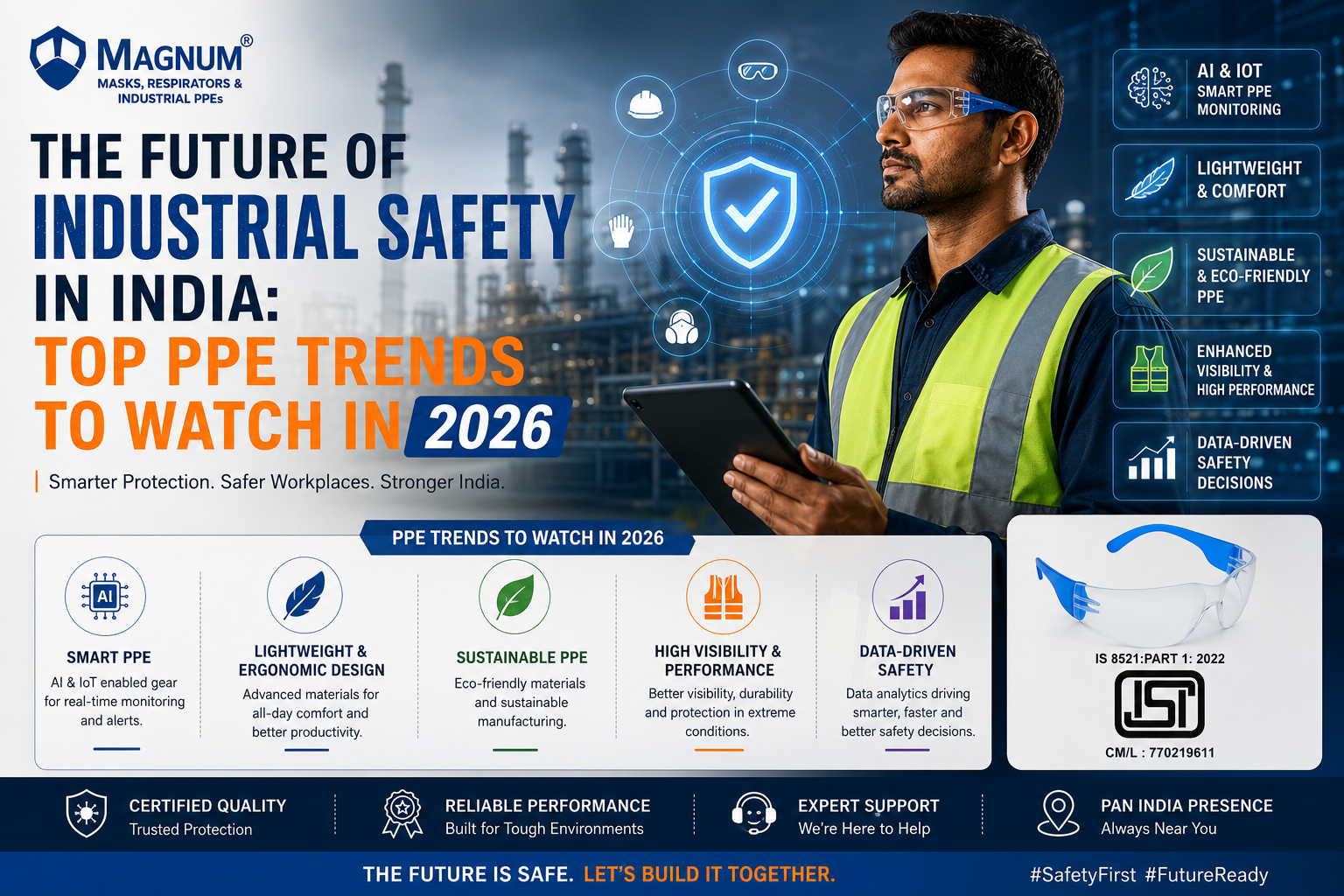
Industrial safety in India is evolving faster than ever before. With the rapid growth of manufacturing, construction, logistics, pharmaceuticals, and heavy engineering sectors, businesses are recognizing that workplace safety is no longer just a compliance requirement but a strategic investment. As industries embrace automation and advanced technologies, the role of Personal Protective Equipment (PPE) is also undergoing a major transformation.
In 2026, the future of PPE is expected to focus on innovation, comfort, smart technologies, and sustainability. Modern organizations are shifting from reactive safety measures to proactive prevention strategies that prioritize employee well-being and operational efficiency. Companies that invest in advanced workplace safety innovations are not only reducing accidents but also improving productivity and workforce morale.
At Magnum Health & Safety Pvt. Ltd., we believe that the future of industrial safety lies in combining high-quality protective equipment with cutting-edge technology and continuous safety awareness. As a trusted provider of industrial safety solutions, Magnum is committed to helping organizations build safer and smarter workplaces.
India’s industrial sector continues to expand, bringing with it a growing workforce exposed to diverse occupational hazards. Construction workers, factory employees, chemical handlers, and logistics personnel all operate in environments where risks are part of daily operations.
Workplace accidents can lead to injuries, operational downtime, legal complications, and significant financial losses. More importantly, they affect the lives of workers and their families. This is why businesses are moving beyond the minimum safety requirements and investing in comprehensive PPE programs.
The industrial safety trends of 2026 are driven by the need to create a culture where safety is integrated into every process. Organizations now understand that protecting employees is essential for long-term business success.
One of the biggest workplace safety innovations in 2026 is the adoption of Smart PPE. Traditional protective equipment is evolving into intelligent safety gear equipped with sensors and real-time monitoring capabilities.
Smart helmets can detect impacts and worker fatigue, while wearable devices monitor heart rate, body temperature, and environmental conditions. If a worker is exposed to excessive heat or hazardous gases, the system can instantly send alerts to supervisors.
These technologies help prevent accidents before they happen. By providing real-time safety data, companies can make faster decisions and reduce workplace risks significantly.
In the past, many employees avoided wearing PPE because it was heavy, uncomfortable, or restricted movement. Today, manufacturers understand that comfort directly impacts compliance.
The future of PPE is centered around lightweight materials, ergonomic designs, and breathable fabrics that allow workers to wear protective gear for extended periods without discomfort. Modern safety glasses feature anti-fog coatings, helmets are designed with improved ventilation, and gloves offer greater flexibility without compromising protection.
At Magnum Health & Safety Pvt. Ltd., product innovation focuses not only on meeting safety standards but also on ensuring that workers can perform their duties comfortably and efficiently.
Sustainability is influencing every industry, and industrial safety is no exception. Businesses are becoming more conscious of the environmental impact of disposable safety products and are looking for greener alternatives.
Manufacturers are introducing recyclable packaging, reusable protective equipment, and eco-friendly production methods. Durable PPE products that last longer also help reduce waste and lower replacement costs for businesses.
As industries work toward sustainable operations, the demand for environmentally responsible safety equipment is expected to grow significantly over the coming years.
Artificial Intelligence (AI) is changing how organizations approach workplace safety. Modern safety systems use AI-powered analytics to identify patterns, predict hazards, and recommend preventive actions before incidents occur.
Data collected from smart PPE and workplace monitoring devices allows safety managers to track trends and identify high-risk areas. This proactive approach helps organizations improve their safety strategies and reduce workplace accidents.
AI-driven solutions are becoming a key part of the future of industrial safety in India, enabling companies to create smarter and more resilient work environments.
Rising temperatures and extreme weather conditions are making heat stress one of the biggest occupational health challenges in India. Workers in construction sites, factories, and outdoor industrial operations are increasingly vulnerable to heat-related illnesses.
To address this issue, businesses are investing in cooling PPE solutions such as ventilated helmets, cooling vests, and breathable protective clothing. Smart wearables that monitor body temperature are also gaining popularity.
Heat stress management will continue to be a major industrial safety trend in 2026 as organizations focus on protecting workers from climate-related risks.
Eye injuries remain one of the most common workplace accidents across industries. In response, companies are adopting advanced protective eyewear with enhanced durability and visibility features.
Modern safety glasses now include anti-scratch coatings, UV protection, anti-fog technology, and lightweight frames for all-day comfort. Face shields and integrated eye protection systems are also becoming standard in high-risk industries.
Magnum Health & Safety Pvt. Ltd. offers premium-quality eye protection solutions designed to meet the demands of modern industrial workplaces while ensuring maximum comfort and reliability.
The one-size-fits-all approach to PPE is gradually disappearing. Different industries face unique challenges, and businesses now require specialized protective solutions based on their work environments.
Construction companies may prioritize impact-resistant helmets and high-visibility clothing, while chemical industries require advanced respirators and splash-resistant goggles. Pharmaceutical facilities demand contamination control and precision safety gear.
Customizing PPE according to industry requirements improves worker safety while enhancing operational performance.
Training is just as important as providing quality safety equipment. Organizations are increasingly using digital learning platforms and Virtual Reality (VR) simulations to train employees in hazard identification and emergency response.
VR-based safety programs allow workers to experience realistic workplace scenarios without actual risk. These immersive experiences improve knowledge retention and prepare employees to react effectively during emergencies.
Technology-driven training methods are expected to become a standard part of workplace safety programs across India.
Government authorities and industry regulators are continuously strengthening occupational health and safety standards. Businesses are expected to maintain proper PPE programs, conduct regular safety audits, and provide adequate employee training.
Compliance is no longer just about avoiding penalties. Organizations with strong safety records build greater trust among employees, clients, and stakeholders while improving their overall reputation.
Partnering with experienced safety solution providers like Magnum Health & Safety Pvt. Ltd. helps businesses stay updated with evolving regulations and maintain industry best practices.
As industrial risks evolve, so does the need for innovative safety solutions. Magnum Health & Safety Pvt. Ltd. remains dedicated to delivering world-class PPE products that combine safety, durability, comfort, and modern technology.
Our extensive portfolio includes safety eyewear, respiratory protection, head protection, hearing protection, hand protection, and workplace safety solutions designed to meet the highest industry standards. We work closely with businesses across sectors to create customized safety strategies that protect workers and improve operational efficiency.
By embracing innovation and focusing on customer needs, Magnum continues to support industries in building safer and more sustainable workplaces for the future.
The future of industrial safety in India is being shaped by innovation, technology, and a stronger commitment to worker well-being. Smart PPE, AI-powered monitoring, sustainable products, advanced training methods, and industry-specific protective solutions are redefining workplace safety standards in 2026.
Businesses that invest in modern workplace safety innovations will not only reduce accidents but also improve productivity, employee confidence, and long-term growth. The future of PPE is no longer about simply meeting regulations; it is about creating intelligent safety ecosystems that protect people and strengthen organizations.
At Magnum Health & Safety Pvt. Ltd., we are proud to be part of this transformation. Through advanced PPE solutions, expert guidance, and a commitment to excellence, we help industries prepare for the future while ensuring that every worker returns home safely at the end of the day.
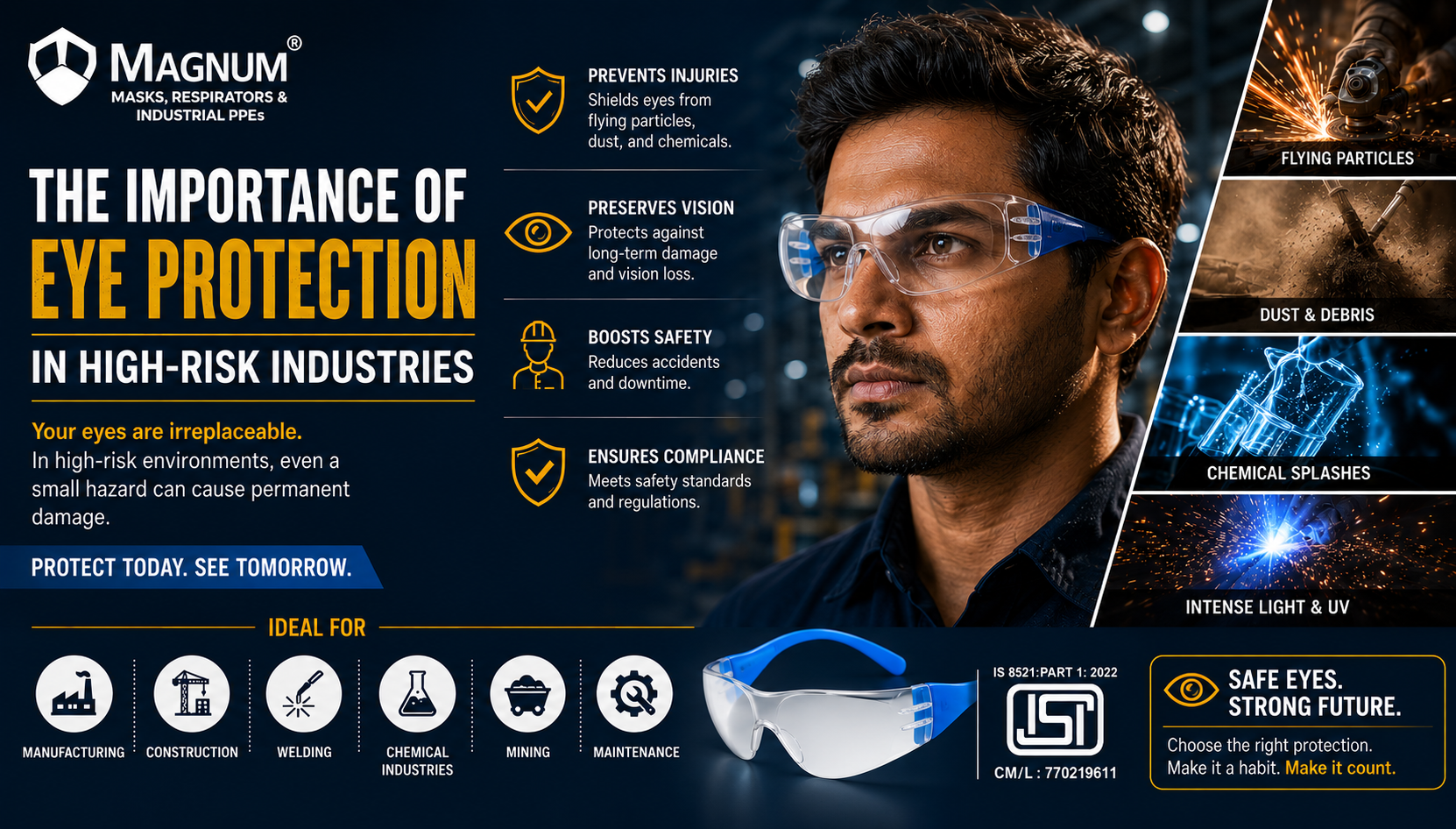
Workplace safety is a critical aspect of every industrial operation, especially in high-risk environments where employees are exposed to various hazards daily. While organizations often prioritize head, hand, and respiratory protection, eye safety is sometimes overlooked despite being equally important. The eyes are among the most vulnerable parts of the human body, and even a minor injury can lead to temporary or permanent vision loss.
In industries such as construction, manufacturing, mining, chemical processing, pharmaceuticals, welding, and oil & gas, workers face constant exposure to flying debris, dust, chemicals, sparks, and harmful radiation. Without proper eye protection, these hazards can cause severe injuries that affect both employee well-being and workplace productivity.
As a leading provider of industrial safety solutions, Magnum Health & Safety Pvt. Ltd. understands the importance of protecting workers from occupational hazards. Through high-quality safety eyewear solutions, businesses can create safer workplaces while ensuring compliance with industry safety standards.
Eye injuries can occur in a matter of seconds, often when workers least expect them. Industrial environments contain numerous risks that can damage vision and lead to costly medical treatments or lost workdays.
Flying particles generated from grinding, drilling, cutting, or machining operations are among the most common causes of eye injuries. These tiny particles can penetrate the eye and cause significant damage if workers are not wearing proper protective eyewear.
Chemical splashes are another major concern in laboratories, pharmaceutical facilities, and chemical manufacturing plants. Even a small amount of hazardous liquid can result in burns, irritation, or permanent eye damage.
Workers involved in welding and metal fabrication are exposed to intense light, sparks, and ultraviolet radiation. Continuous exposure without specialized eye protection can lead to severe vision problems over time.
Dust, smoke, and airborne contaminants can also cause irritation and reduce visibility, increasing the risk of workplace accidents. These hazards make eye protection a necessity rather than an option.
The primary purpose of safety eyewear is to create a protective barrier between the eyes and workplace hazards. Properly designed safety glasses, goggles, and face shields significantly reduce the likelihood of injuries while improving worker confidence and productivity.
Vision is one of the most valuable human senses. Losing vision, even partially, can have life-changing consequences for workers and their families. Preventing eye injuries should therefore be a top priority for every organization.
Eye injuries not only impact employees but also affect businesses. Medical expenses, compensation claims, legal liabilities, and operational downtime can create substantial financial burdens for employers.
Investing in quality eye protection demonstrates a company’s commitment to employee welfare. It helps build a strong safety culture where workers feel valued and protected while performing their duties.
Construction sites are filled with hazards such as flying debris, dust, nails, and concrete particles. Workers operating power tools or heavy equipment face constant risks of eye injuries.
Safety glasses with impact-resistant lenses provide essential protection against these hazards. Employers must ensure workers wear approved eyewear at all times while on-site.
Manufacturing facilities involve cutting, grinding, welding, and machining operations that produce high-speed particles and sparks. These activities increase the risk of eye injuries significantly.
Protective eyewear designed for industrial environments helps shield workers from flying fragments while maintaining clear visibility throughout their shifts.
Employees working with chemicals face the risk of accidental splashes and exposure to harmful substances. Even brief contact with certain chemicals can result in severe eye damage.
Chemical-resistant safety goggles offer superior protection by creating a secure seal around the eyes and preventing hazardous liquids from entering.
The oil and gas sector presents multiple risks, including chemical exposure, dust, pressure-related incidents, and airborne particles. Workers often operate in challenging environments where eye protection is essential.
Durable safety eyewear helps protect personnel from potential hazards while ensuring comfort during extended working hours.
Pharmaceutical manufacturing environments require protection from chemical substances, powders, and airborne contaminants. Maintaining worker safety while ensuring product quality is crucial.
High-quality safety glasses and goggles help employees perform tasks efficiently while minimizing exposure risks.
Choosing the right eye protection depends on the nature of workplace hazards. Different environments require specific types of protective equipment to ensure maximum safety.
Safety glasses are ideal for protection against impact hazards, dust, and airborne particles. They are commonly used in manufacturing, construction, and general industrial applications.
Safety goggles provide enhanced protection by covering the eyes completely. They are suitable for chemical handling, laboratory work, and environments with excessive dust exposure.
Face shields offer additional protection against chemical splashes, heat, and flying debris. They are often used alongside safety glasses or goggles for comprehensive protection.
Welding helmets and specialized protective eyewear are designed to shield workers from harmful radiation, sparks, and intense light generated during welding operations.
Effective eye protection should combine safety, comfort, and durability. Workers are more likely to wear protective equipment consistently when it is comfortable and practical.
Impact-resistant lenses help withstand high-velocity particles and reduce the risk of injuries. Polycarbonate lenses are widely preferred due to their strength and lightweight properties.
Anti-fog coatings improve visibility in humid environments, preventing lens fogging that can affect worker performance and safety.
Scratch-resistant coatings extend the lifespan of eyewear while maintaining clear vision. This feature is especially valuable in demanding industrial settings.
UV protection safeguards workers who perform outdoor tasks or are exposed to harmful ultraviolet radiation. Long-term UV exposure can contribute to vision-related health issues.
Providing safety eyewear alone is not enough. Organizations must create a workplace culture that prioritizes eye safety and encourages consistent PPE usage.
Regular training sessions help employees understand workplace hazards and the importance of wearing protective eyewear. Awareness programs also educate workers on identifying potential risks.
Supervisors should lead by example and ensure compliance with safety protocols. Routine inspections can help identify damaged or improperly used protective equipment.
Employers should involve workers in PPE selection processes. When employees have access to comfortable and well-designed safety eyewear, compliance rates typically improve.
Recognizing and rewarding safe workplace behavior can further strengthen a company’s commitment to eye protection and overall safety performance.
At Magnum Health & Safety Pvt. Ltd., worker safety is at the heart of everything we do. We provide premium-quality safety eyewear solutions designed to meet the demanding needs of modern industries.
Our safety eyewear products are engineered for durability, comfort, and superior protection. From impact-resistant safety glasses to specialized industrial eye protection solutions, we help businesses safeguard their workforce effectively.
With years of expertise in occupational health and safety, Magnum Health & Safety Pvt. Ltd. supports organizations in creating safer work environments while maintaining compliance with industry standards.
By choosing Magnum, companies gain access to reliable safety products that improve worker protection, productivity, and confidence on the job.
Eye injuries remain one of the most common workplace incidents across high-risk industries. However, most of these injuries are preventable through proper awareness, training, and the use of high-quality protective eyewear.
Investing in eye protection is not merely a regulatory requirement; it is a responsibility that every employer must take seriously. Protecting workers’ vision helps reduce accidents, improve productivity, and strengthen workplace safety culture.
As industries continue to evolve, the need for advanced and reliable eye protection solutions becomes even more important. Magnum Health & Safety Pvt. Ltd. remains committed to helping organizations protect their workforce through innovative safety eyewear and comprehensive workplace safety solutions.
Because when it comes to workplace safety, protecting vision today means preserving a brighter future for tomorrow.

India is facing record-breaking temperatures in 2026, and factory workers are among the most affected. Continuous exposure to extreme heat in industrial environments increases the risk of dehydration, fatigue, heat exhaustion, and even life-threatening heat strokes. Yet many factories still underestimate the importance of proper heat stress management. Because apparently “just drink water” is still considered a full workplace safety strategy in some corners of humanity. Spectacular.
At Magnum OHS, industrial worker safety remains a top priority. Through advanced PPE, cooling solutions, and safety training programs, companies can reduce heat-related hazards, improve worker wellbeing, and maintain compliance with workplace safety standards.
Heat stress occurs when the body struggles to regulate its temperature effectively due to excessive heat exposure. Factory environments with heavy machinery, poor ventilation, and physically demanding tasks significantly increase the danger. If not managed properly, heat stress can lead to dizziness, fainting, severe illness, and reduced productivity.
Many factories fail to implement environmental monitoring systems, proper hydration schedules, or heat-resistant protective gear. However, integrating effective heat stress management measures helps protect employees while improving operational efficiency and reducing downtime.
Factories operating in poorly ventilated industrial zones experience intense heat buildup, making working conditions extremely challenging for employees.
Continuous manual labor, repetitive movements, and prolonged exposure to high temperatures place additional physical strain on workers.
Outdated or non-breathable protective equipment traps heat and sweat, increasing discomfort and the likelihood of heat-related illnesses.
Workers and supervisors often fail to identify early symptoms of heat stress, delaying preventive action and medical response. Human beings ignoring warning signs until things become catastrophic. A timeless industrial tradition.
Providing regular hydration breaks and strategically placed water stations is essential for preventing dehydration. Workers should also be educated about recognizing the symptoms of heat stress so early action can be taken before emergencies occur.
Installing industrial cooling systems, ventilation units, or shaded rest areas can significantly reduce heat exposure. Even partial cooling solutions can improve worker comfort and safety during high-intensity tasks.
Traditional PPE often increases body heat retention. Magnum OHS offers lightweight helmets, breathable jackets, and cooling vests specifically designed for high-temperature industrial environments. These solutions improve comfort without compromising worker protection.
Regular workshops and safety drills help employees and supervisors recognize symptoms such as nausea, dizziness, and rapid heartbeat. Proper training ensures faster response times and better workplace preparedness.
Scheduling physically demanding tasks during cooler hours, rotating shifts, and limiting exposure during peak heat periods can greatly reduce heat-related incidents. Sometimes the revolutionary solution is simply “don’t make people melt at 2 PM.”
Modern technologies such as IoT sensors, wearable monitoring devices, and smart PPE are transforming industrial safety in 2026. These systems can detect excessive heat exposure in real time and alert supervisors before conditions become dangerous. Magnum OHS incorporates advanced safety technologies into its solutions to help factories prevent accidents proactively.
Factories should maintain first-aid kits, cooling stations, and clearly defined emergency evacuation procedures to respond quickly during heat-related incidents. Regular emergency drills and response planning can save lives and minimize workplace disruptions.
Magnum OHS also assists companies in developing customized emergency response strategies tailored to specific industrial operations and risk levels.
Following OSHA guidelines and local workplace safety regulations is essential for ensuring legal compliance and worker protection. Proper documentation of PPE usage, employee training, and heat monitoring procedures is critical during inspections and audits.
Magnum OHS supports organizations in meeting regulatory requirements while improving overall workplace safety standards.
Healthy workers are more efficient, focused, and less likely to make costly mistakes.
Proper safety measures significantly lower the risk of heat-related illnesses and workplace emergencies.
Preventing downtime, medical expenses, and legal complications helps reduce overall operational costs.
Employees who feel safe and valued are more motivated, productive, and likely to remain with the organization. Strange how treating workers like actual humans improves morale. Corporate science continues to advance.
Heat stress has become a major workplace safety concern for Indian factories in 2026. Organizations that fail to address it risk employee health, productivity losses, and regulatory penalties. By implementing effective safety measures such as hydration programs, cooling solutions, advanced PPE, training initiatives, and emergency planning, factories can create safer and more productive work environments.
Partnering with Magnum OHS provides companies with access to expert guidance, advanced protective equipment, and comprehensive heat stress management solutions designed for modern industrial challenges.

India’s industrial workforce often operates under extreme summer conditions where high temperatures, humidity, and long working hours create serious challenges on-site. Workers in construction, cement plants, fabrication units, manufacturing facilities, pharmaceutical industries, and chemical processing units are constantly exposed to heat stress while wearing Personal Protective Equipment (PPE).
Although PPE is essential for workplace safety, many workers remove masks, helmets, or safety eyewear during shifts because of discomfort caused by sweat, heat buildup, poor ventilation, and fogging. Even temporary removal of protective equipment can expose workers to hazardous dust, fumes, chemicals, sparks, and airborne particles.
At Magnum Health & Safety Pvt. Ltd., we believe PPE should deliver both protection and comfort. Industrial safety equipment designed for Indian working conditions must support breathability, durability, long-hour usability, and worker compliance, especially during extreme summer environments.
In many industrial regions across India, temperatures regularly cross 40°C during summer months. Workers wearing helmets, respirators, gloves, and protective eyewear for extended hours often experience trapped heat, excessive sweating, and breathing discomfort.
Poorly ventilated masks can make breathing difficult, while ordinary safety goggles often fog because of sweat and temperature differences. Over time, workers begin loosening or removing PPE simply to gain temporary relief from heat stress. Unfortunately, this behavior significantly increases workplace safety risks.
Excessive sweating affects more than just comfort. It directly impacts worker focus, concentration, and productivity. Constantly adjusting helmets, wiping sweat, or clearing fogged eyewear distracts workers from critical tasks.
In industries involving welding, fabrication, heavy machinery, chemical handling, and construction work, even small distractions can lead to serious accidents. Heat stress combined with uncomfortable PPE creates a hidden but major industrial safety challenge for businesses across India.
One of the biggest reasons for poor PPE compliance is outdated or uncomfortable product design. Heavy helmets, low-breathability materials, poorly fitting respirators, and low-quality eyewear often become difficult to wear during long shifts.
Many businesses still prioritize low-cost PPE over worker comfort, leading to inconsistent PPE usage at industrial sites. While cheaper equipment may reduce initial procurement costs, it can increase long-term safety risks if workers repeatedly remove their protective gear.
Modern industrial PPE must balance:
Industrial workers face continuous exposure to harmful airborne contaminants such as dust particles, smoke, welding fumes, and chemical vapors. Removing respiratory protection even for short periods can expose workers to hazardous particles that may cause long-term respiratory health issues.
Industries such as construction, cement, mining, fabrication, pharmaceuticals, chemical processing, and manufacturing require reliable respiratory protection throughout the entire work shift. Magnum’s BIS-certified filtering half masks and advanced N95 respirators are designed to provide effective protection while improving breathability for Indian industrial conditions.
Sweat entering the eyes is a common issue during summer operations. Workers frequently remove safety eyewear to wipe perspiration or clear fogged lenses. This increases exposure to flying particles, grinding sparks, metal debris, chemical splashes, and dust hazards.
Modern anti-fog safety eyewear with improved ventilation and lightweight construction helps workers maintain visibility and wear protection consistently during demanding shifts. Magnum’s industrial safety eyewear range is designed for durability, optical clarity, anti-fog performance, and long-hour comfort while meeting industrial safety standards.
Industrial safety helmets are mandatory across multiple industries, but poorly designed helmets often trap heat and moisture. Workers may loosen chin straps, wear helmets incorrectly, or remove them during active work to reduce discomfort.
Lightweight and ergonomically designed helmets help improve worker acceptance and compliance while maintaining required impact protection standards. Magnum’s safety helmet range is developed to support worker comfort alongside reliable industrial protection.
Workers are more likely to wear PPE consistently when it feels practical and comfortable. Well-designed PPE improves worker concentration, shift endurance, productivity, safety discipline, and operational efficiency. Industries are increasingly recognizing that PPE must support both protection and worker usability during long operating hours.
Heat stress and uncomfortable equipment contribute significantly to worker fatigue. Workers experiencing overheating often take frequent breaks, lose concentration, reduce work pace, and experience lower productivity levels.
Breathable respirators, anti-fog eyewear, and lightweight helmets help reduce fatigue while improving overall workplace efficiency. Even small improvements in PPE comfort can create meaningful improvements in worker performance and safety compliance.
Rising temperatures and longer summer seasons are forcing industries to rethink workplace safety strategies. PPE designed for cooler international climates may not perform effectively under Indian industrial conditions involving high heat, humidity, dust-heavy environments, and extended working shifts.
Businesses increasingly require PPE solutions specifically engineered for Indian industries, including:
Magnum manufactures high-performance industrial respiratory protection products including N95 respirators, BIS-certified filtering half masks, industrial respirators, and disposable respiratory protection solutions.
These products are designed to provide:
Magnum is among the few Indian manufacturers holding both BIS and NIOSH approvals for respiratory protection products.
Magnum’s industrial eyewear solutions are engineered for demanding industrial environments where visibility, durability, and comfort are critical. The product range supports industries including manufacturing, construction, welding, engineering, chemical processing, and infrastructure projects.
With over 30 years of manufacturing experience, Magnum Health & Safety Pvt. Ltd. continues to support industries with certified PPE solutions designed for modern workplace challenges.
The company’s product portfolio includes:
These solutions are designed to improve worker protection, comfort, and long-term safety compliance.
The hidden cost of sweat in Indian workplaces goes far beyond discomfort. When workers remove PPE because of heat, fogging, or poor ventilation, workplace safety immediately weakens. This increases the risk of injuries, respiratory exposure, and operational disruptions.
Industries that invest in comfortable, climate-friendly PPE can achieve better worker compliance, improved productivity, reduced accidents, higher operational efficiency, and a stronger workplace safety culture.
As India’s industrial sector continues to grow, investing in high-quality PPE designed specifically for Indian conditions is becoming essential for sustainable industrial safety. Modern PPE must not only protect workers but also remain comfortable enough for workers to wear consistently throughout demanding shifts.
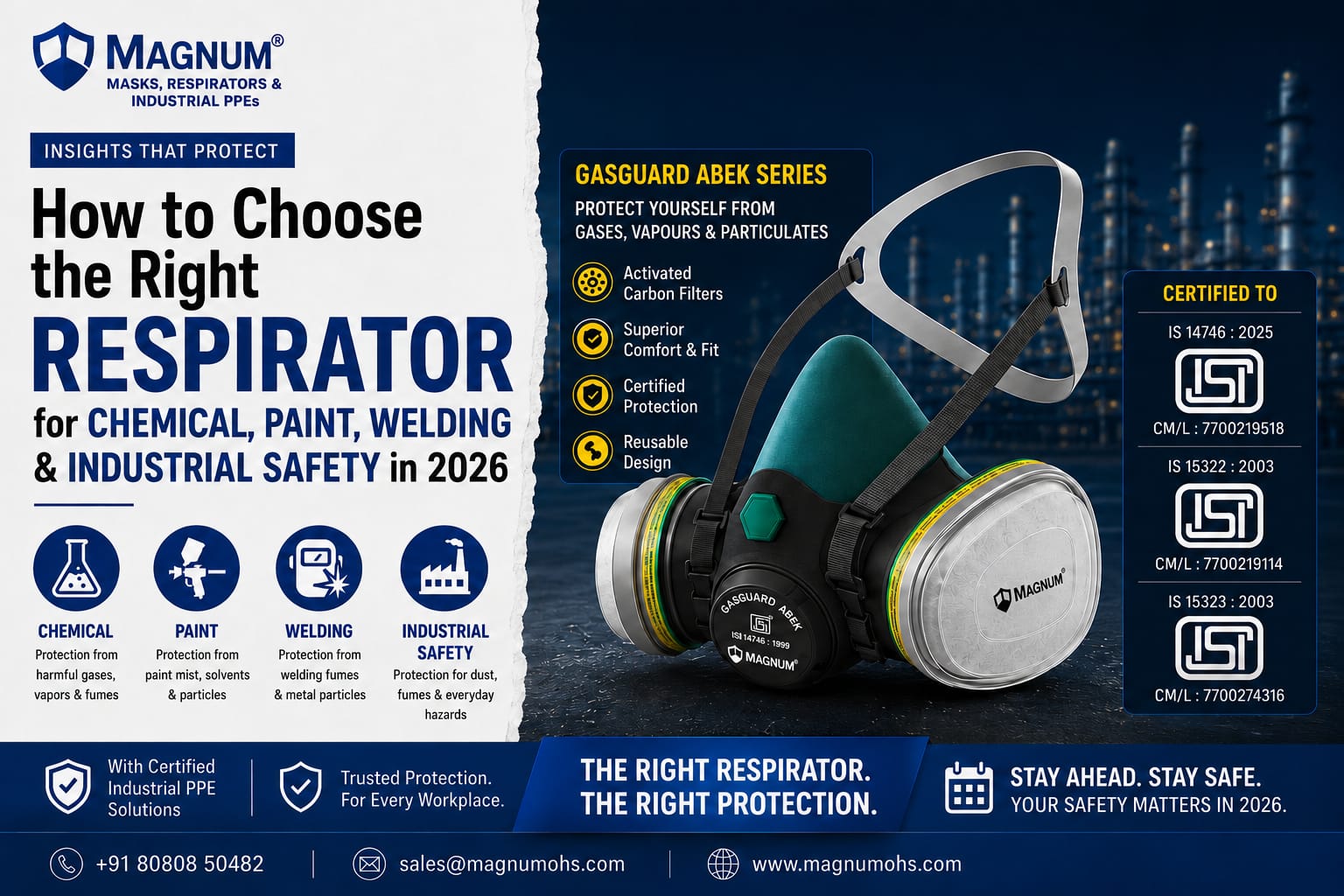
Industrial safety has changed a lot in recent years. Modern factories, paint booths, chemical plants and fabrication units now deal with more complex airborne hazards than ever before. Dust is no longer the only concern. Workers are exposed daily to toxic vapours, welding fumes, solvent gases, smoke particles and chemical contaminants that can seriously affect long-term health. Humanity really built giant factories full of invisible lung damage and then acted surprised when breathing became important. Remarkable species.
In 2026, industries are focusing more on advanced respiratory protection systems instead of relying on ordinary disposable masks. Choosing the right reusable respirator is now essential for worker safety, productivity and compliance.
At Magnum Health & Safety Pvt. Ltd., the Gasguard Series is developed to meet the growing demand for reliable respiratory protection across chemical processing units, paint industries, welding workshops, pharmaceutical facilities, engineering plants and heavy manufacturing environments.
Understanding Workplace Air Hazards
Every industrial environment contains different airborne risks. Selecting the wrong respirator can expose workers to harmful contaminants even when they believe they are protected.
Chemical Industries
Chemical plants often release hazardous vapours, toxic gases, acid fumes and airborne reactions during manufacturing and handling processes. Workers require respirators that can handle chemical exposure effectively.
Paint & Coating Applications
Spray painting operations generate solvent vapours, organic gases and fine paint mist particles. Standard dust masks cannot filter these harmful vapours properly.
Welding & Fabrication Areas
Welding produces microscopic metal fumes, smoke particles and airborne contaminants that may affect respiratory health over time, especially in enclosed working spaces.
Manufacturing & Industrial Production
General industries expose workers to mixed airborne hazards such as dust, fumes, smoke, grinding particles and industrial pollutants during routine operations.
Why Reusable Respirators Are Important in 2026
Modern industries are moving toward reusable cartridge-based respirators because they offer stronger protection, better durability and improved comfort during long working hours.
Unlike disposable masks, reusable respirators are designed to work with replaceable filter cartridges specific to different industrial hazards. This allows industries to customize protection based on the actual workplace environment.
The Magnum Gasguard Series is designed to support industries that require dependable respiratory protection for daily operational use.
Magnum Gasguard Respirator Solutions
The Gasguard range includes multiple respirator options suitable for different industrial applications and exposure levels.
Single-Cartridge Respirator
Ideal for lighter industrial tasks and controlled environments where workers require comfortable respiratory protection with easy usability.
Dual-Cartridge Respirator
Designed for industries requiring enhanced airflow, balanced weight distribution and improved breathing comfort during extended usage.
Full-Face Respirator
Suitable for environments where eye and face protection are equally important along with respiratory safety, especially in high-exposure industrial operations.
Key Features of Magnum Gasguard Series
The Gasguard respirator range is developed for practical industrial performance and worker comfort.
Secure Face Seal
Designed to minimize leakage and improve protection against contaminated air entry.
Comfortable Long-Hour Usage
Built for extended industrial shifts where workers require breathing comfort throughout demanding operations.
Durable Industrial Construction
Manufactured to withstand heat, dust, sweat and harsh factory conditions common in Indian industries.
Replaceable Cartridge System
Allows easy filter replacement based on workplace hazards and operational requirements.
Versatile Industrial Applications
Suitable for chemical handling, paint spraying, welding operations, pharmaceutical production and manufacturing industries.
Choosing the Correct Cartridge Matters
A respirator performs effectively only when paired with the right filter cartridge. Different workplace hazards require specific filtration solutions.
Industries may require cartridges designed for:
Before selecting any respirator, companies should properly assess workplace air hazards and identify the contaminants present in the working area.
Proper Fit Is Critical for Protection
Even high-quality respiratory equipment cannot provide effective protection if the fit is poor. Loose-fitting masks allow contaminated air to enter through gaps around the face.
Magnum Gasguard respirators are designed with adjustable fitting systems to improve sealing, comfort and stability during industrial work.
Industries should also train workers on:
Because apparently humans need training for “cover the dangerous air holes correctly.” Evolution remains a work in progress.
Why Industries Choose Magnum Gasguard
Indian industrial environments demand respiratory equipment that can perform reliably under difficult working conditions. High temperatures, dusty operations, physically demanding shifts and continuous production cycles require respirators that balance protection with comfort.
The Gasguard Series focuses on:
With growing awareness about occupational health in 2026, industries are increasingly investing in better respiratory safety systems to protect workers and improve compliance standards.
Final Thoughts
Choosing the right respirator is one of the most important workplace safety decisions for any industry. Chemical fumes, paint vapours, welding smoke and industrial contaminants require proper reusable respiratory protection instead of basic disposable masks.
The Magnum Gasguard Series is designed to support modern industrial workplaces with dependable, comfortable and durable respiratory protection solutions built for real-world industrial conditions.