

 sales@magnumohs.com
 00 91 80808 50482
_Logo.jpg)

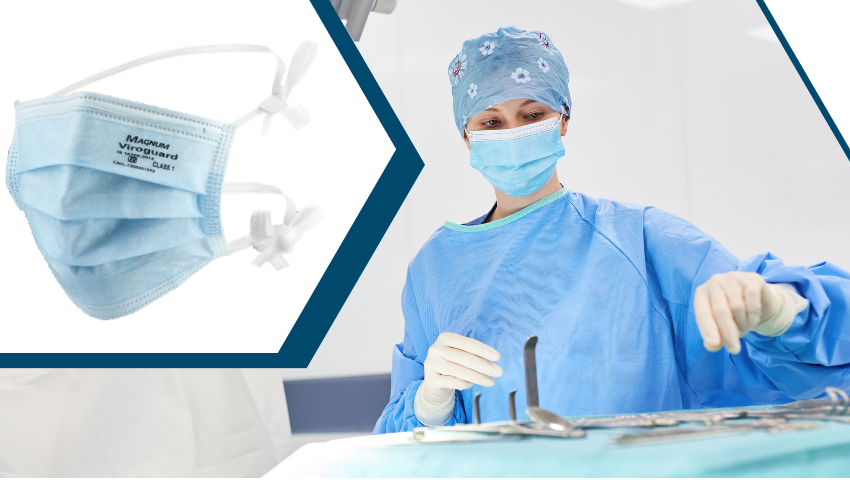
In the ever-evolving landscape of healthcare, the significance of personal protective equipment (PPE) cannot be overstated. Among the various components of PPE, surgical masks stand out as frontline defenders against the spread of infections. These masks play a pivotal role in safeguarding the health of both healthcare professionals and patients, serving as an essential barrier against airborne particles that may carry harmful pathogens. In this blog, we will delve into the critical role of surgical masks, emphasizing their importance in preventing the transmission of infections within healthcare settings.
Healthcare environments are often breeding grounds for infections due to the close proximity of individuals, some of whom may be carriers of contagious diseases. In such settings, the transmission of infections poses a constant threat, making the use of protective measures imperative. Surgical masks, designed to filter out airborne particles, are a fundamental tool in the prevention of infection spread.
Healthcare professionals, including doctors, nurses, and support staff, are at the forefront of patient care. Their exposure to various infectious agents is significantly higher than that of the general population. Surgical masks act as a crucial line of defense for these professionals, reducing the risk of inhaling or exhaling infectious particles during medical procedures, examinations, or routine patient interactions.
Moreover, surgical masks provide an additional layer of protection by preventing the wearer from touching their face, a common route of infection transmission. This is especially important in healthcare settings where practitioners are in constant contact with potentially contaminated surfaces.
While healthcare professionals benefit from wearing surgical masks, patients also reap the rewards of a protected environment. Patients, particularly those with compromised immune systems, are vulnerable to infections. The use of surgical masks in healthcare settings helps minimize the risk of patients contracting infections from healthcare providers or other patients.
Numerous studies have demonstrated the efficacy of surgical masks in reducing the transmission of airborne particles. According to the World Health Organization (WHO), surgical masks are effective in preventing the spread of respiratory infections, including influenza and COVID-19. These masks act as a physical barrier, trapping respiratory droplets and preventing them from entering the air and reaching others.
In conclusion, the role of surgical masks in healthcare cannot be overstated. They serve as indispensable tools in the battle against infection spread, protecting both healthcare professionals and patients. The effectiveness of surgical masks in reducing the transmission of airborne particles has been well-established through various studies and is recognized by global health organizations.
Magnum Health & Safety, a leading provider of personal protective equipment, plays a crucial role in supporting the healthcare industry. Their commitment to producing high-quality surgical and N95 masks contributes significantly to the overall safety of healthcare professionals and patients. These masks adhere to stringent standards and offer superior filtration capabilities, ensuring optimal protection in healthcare settings. By investing in Magnum Health & Safety masks, the healthcare industry can further fortify its defenses against infectious agents, promoting a safer and healthier environment for all.

In the ever-evolving landscape of the pharmaceutical industry, compliance with regulatory guidelines is not merely a box to check but a fundamental aspect that ensures the safety of both employees and the products they develop. One critical area that has gained increased attention, especially in the wake of global health concerns, is mask usage within pharmaceutical companies. This blog will delve into the importance of compliance with mask regulations in the pharmaceutical sector and provide insights into navigating the complex web of guidelines.
The pharmaceutical industry operates under stringent regulatory frameworks to guarantee the quality and safety of pharmaceutical products. While guidelines may vary across regions, adherence to health and safety standards is universal. In recent years, the emphasis on respiratory hygiene, especially in the context of infectious diseases, has led to a reevaluation of mask-wearing protocols within pharmaceutical facilities.
Organizations like the World Health Organization (WHO) and the Centers for Disease Control and Prevention (CDC) play pivotal roles in shaping international health standards. Their recommendations often influence local regulatory bodies and set the tone for best practices in the industry. Pharmaceutical companies must stay abreast of these recommendations to align their mask usage policies with global health standards.
Pharmaceutical companies deal with a wide range of chemical compounds, some of which may pose respiratory hazards. Masks act as a crucial line of defense, protecting employees from inhaling harmful substances. Compliance with mask usage guidelines is, therefore, not only a regulatory requirement but a fundamental aspect of ensuring a safe working environment.
In addition to safeguarding employees, masks play a pivotal role in preserving the integrity of pharmaceutical products. Contamination risks, especially in cleanroom environments, are significantly reduced when employees adhere to proper mask protocols. This is paramount in industries where even the slightest contamination can compromise the quality of products and, subsequently, patient safety.
Pharmaceutical companies must develop customized mask usage protocols that align with their specific operations and the nature of their products. This involves a thorough risk assessment to identify potential respiratory hazards and tailor mask guidelines accordingly. The customization of protocols not only ensures compliance but also enhances overall safety measures.
Effective implementation of mask protocols requires comprehensive employee training. This includes education on the types of masks suitable for different scenarios, proper donning and doffing procedures, and the importance of consistent adherence. Regular training sessions and updates ensure that employees remain informed and vigilant about the evolving regulatory landscape.
Regulatory guidelines, especially those related to health and safety, are subject to change. Pharmaceutical companies must establish robust systems for continuous monitoring of regulatory updates. This proactive approach allows companies to adapt their mask protocols swiftly, ensuring compliance with the latest standards and regulations.
In the pharmaceutical industry, our unwavering commitment to compliance with mask usage guidelines is more than a regulatory mandate—it is a promise to prioritize the well-being of our dedicated workforce and uphold the integrity of our groundbreaking products. As we navigate the intricate regulatory landscape, Magnum Health & Safety, a renowned manufacturer of respiratory protection solutions, including our flagship products—the Magnum Surgical Masks and Magnum N95 Masks—plays a pivotal role in achieving these critical objectives.
Magnum Health & Safety understands that respiratory protection is not a one-size-fits-all solution. With precision and care, we manufacture high-quality, industry-compliant masks that are indispensable in pharmaceutical settings. Our dedication goes beyond crafting exceptional products; we aim to be active collaborators with pharmaceutical companies, working in tandem to customize mask solutions that align seamlessly with specific needs and operational nuances.
In recognizing the dynamic nature of the pharmaceutical industry, Magnum Health & Safety offers more than just masks; we offer a partnership that prioritizes continuous support. Our expertise empowers us to assist in creating and adapting personalized protocols, ensuring that Magnum’s Surgical Masks and N95 Masks integrate seamlessly with ever-evolving regulatory guidelines.
In the face of a fast-paced and ever-changing regulatory landscape, having Magnum Health & Safety as your partner provides a competitive advantage. We don’t just deliver respiratory protection; we provide ongoing support, keeping you informed about the latest regulatory updates and offering training resources to guarantee the proper implementation of our Magnum Masks—Surgical and N95.
Our collaboration stands as a testament to shared dedication to the highest standards of safety and compliance. As we collectively navigate the challenges of the pharmaceutical industry, Magnum Health & Safety, with its distinguished Surgical and N95 Masks, is not just a manufacturer but a committed ally, contributing to the creation of a safer and more resilient working environment for your employees. Together, we enhance our industry’s capacity to deliver innovative and safe products, ensuring a healthier future for all.
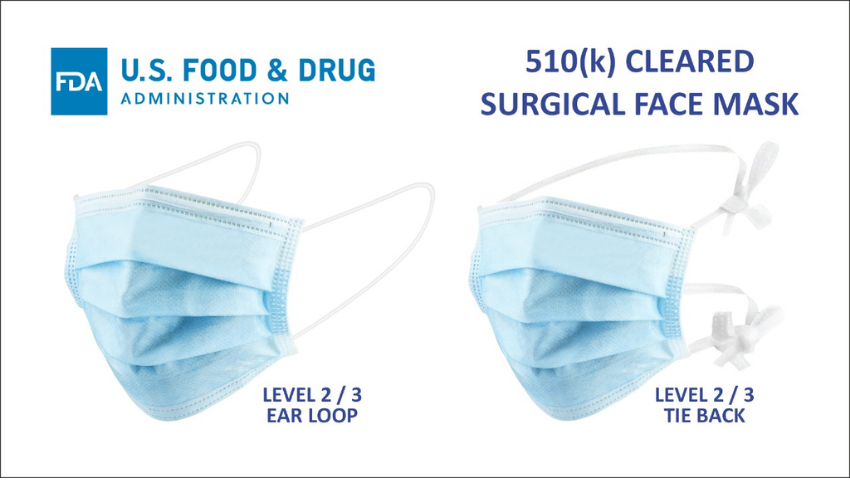
Magnum, One of the largest mask manufacturers from Mumbai, which has been in this industry for the last 29 years has recently received the US Food and Drug Administration (FDA) 510 (k) clearance, which is a approval by the United States government that the products are safe and effective, for surgical masks & also NIOSH Approval on surgical N95 mask, which is the first company in India to achieve it.
The Covid 19 out break was a time of chaos and distress when we got to see a shortage of N95 masks for a brief period of time and during that time many faux brands emerged who took advantage of the unawareness about mask quality and began selling cheap quality masks which did nothing to protect covid warriors from the harmful virus, however, even in those times of shortage and high demand, Magnum never compromised its quality and manufactured the best quality masks and supplied millions of quality N95 and Surgical masks to all Major Indian hospitals and Health Ministry of India.
Magnum with its leadership skill is about to venture into huge untapped market of USA, Latin America and Central America with its newfound 510 (k) clearance and Setting the Path for other Indian Masks manufacturers for years to come. This will put an end to Chinese Domination in the mask industry, helping small Indian mask manufacturers along the way.
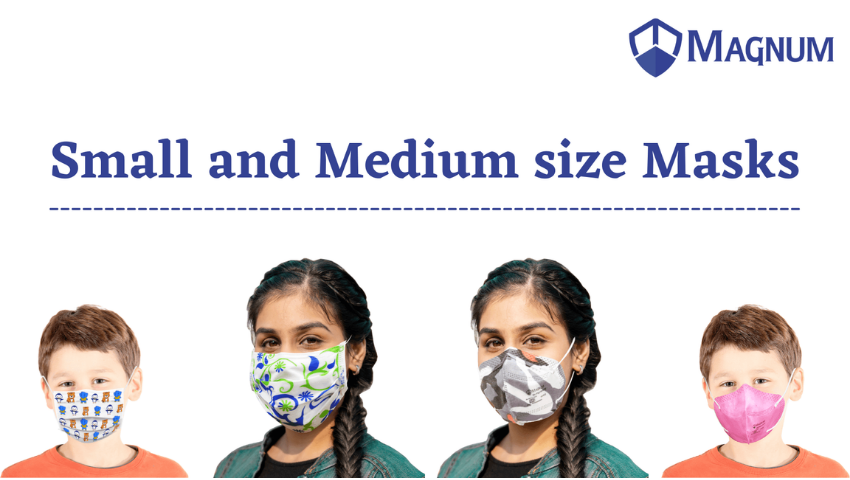
Magnum launches its New Product – Special Kid’s Face Mask for School Students
With the number of COVID cases declined, all Schools and Colleges are opening physical classes for the students in most States. Meanwhile, wearing face masks and maintaining physical distance from students in many school settings under the government’s guidelines against the prevention of coronavirus is still the mandatory norm. Masks remain a simple however effective tool to help prevent the transmission of COVID-19.
They are important, especially for children. To reduce their chances of contracting SARS-CoV-2 (the virus that causes COVID-19 and offer protection against airborne diseases such as H1N1, Drug resistance, Sars and influenza, we at Magnum Health & Safety Pvt. Ltd, have manufactured new product, “Quality Special kid’s Face Mask.” It comes in two types 3PLY and N95 available in both small (for age group 3 to 7 years) and medium (for age group 7 to 15 years) sizes which can fit to the face and is made up of material with different colours and attractive prints that can prevent bacterial and viral infections.
When making decisions about using face masks for kids, we always recommend our developed new products, Surgical 3PLY and N95 Certified Masks that have good filtration efficiency unlike cotton masks which do not consist of filtration and can’t provide protection against COVID. So want to get a Magnum Special Kid’s Face Mask? Click Here to Get in Touch and for More Information on Products.
Starting on August 2021, the Manufacturer & Exporter of NIOSH Certified N-95 mask, dust mask, Tie mask, disposable mask, swine flu mask, ear loop mask, PE and non-woven shoe cover, bouffant caps, face mask & surgical mask in Mumbai, India, Magnum Health & Safety Pvt. Ltd, has changed the company’s logo to embody the essence of the business it represents (as per the current and future branding needs) and establish its most visually exposed image (that encourages recognition by consumers).
New Logo

Old Logo